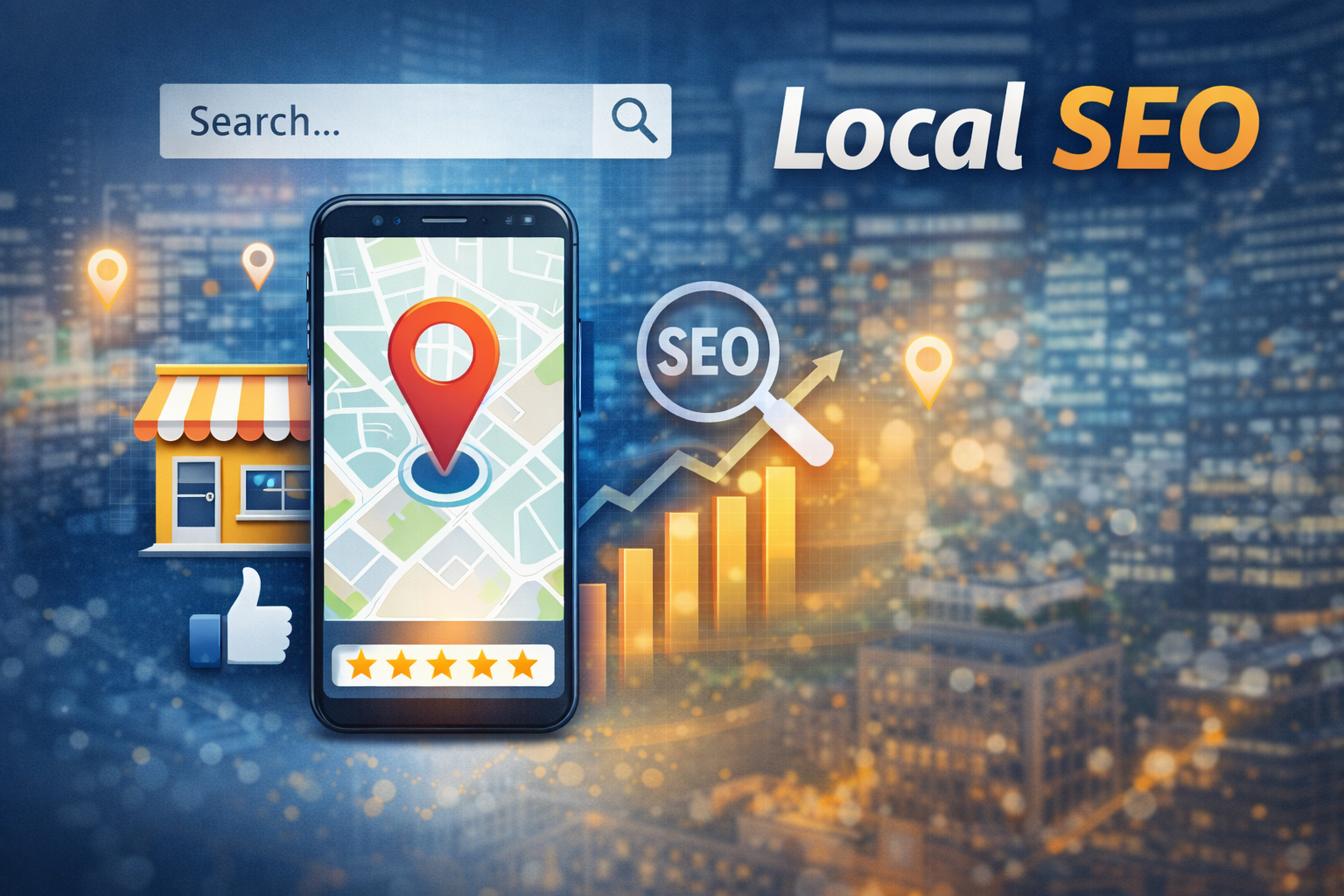
In today’s digital world, being visible online is critical for small businesses—but it’s not just about being on the internet. Local SEO (Search Engine Optimization) is the key to attracting customers in your community. Whether you own a coffee shop, a boutique, or a service-based business, optimizing your local presence ensures that people nearby can find you when they need your products or services.
Local SEO helps your business stand out in local search results, appear on Google Maps, and earn the trust of your community. By focusing on the right strategies, small businesses can compete with larger companies and dominate their local market.
What Is Local SEO and Why It Matters
Local SEO is a digital marketing strategy focused on improving a business’s visibility in geographically-relevant searches. For example, when someone searches for “best pizza near me” or “plumber in Gulf Shores,” local SEO determines which businesses appear at the top of the results.
Why it matters:
-
Targeted audience: Attracts people who are ready to buy in your area.
-
Better conversion rates: Local searchers are more likely to take action quickly.
-
Cost-effective marketing: Local SEO often delivers more ROI than broad advertising.
-
Competitive advantage: Small businesses can outrank larger competitors in local search results.
Optimize Your Google Business Profile
Your Google Business Profile (GBP) is the cornerstone of local SEO. A complete and accurate profile increases your chances of showing up in local searches and on Google Maps.
Tips for optimizing your GBP:
-
Fill out every section: business name, address, phone, website, hours, and categories.
-
Add high-quality photos of your products, services, and location.
-
Regularly update posts, offers, and events.
-
Encourage happy customers to leave reviews and respond to them professionally.
Pro tip: Businesses with consistent reviews and accurate information tend to rank higher in local search results.
Local Keyword Research
Keywords aren’t just for websites—they’re also crucial for local SEO. Using keywords that include your location helps Google understand where your business operates.
Strategies:
-
Combine services with your city or neighborhood (e.g., “Gulf Shores real estate agent”).
-
Include keywords in titles, meta descriptions, and page content.
-
Use keywords naturally in blog posts, FAQs, and service pages.
By targeting local keywords, you increase the chances that people searching nearby will find your business first.
Building Local Citations and Online Listings
A citation is any online mention of your business’s name, address, and phone number (NAP). Local citations on reputable websites, directories, and review sites improve your credibility and search ranking.
Tips:
-
Keep NAP information consistent across all platforms.
-
Submit your business to high-authority directories like Yelp, BBB, or Chamber of Commerce listings.
-
Encourage local partnerships that mention your business online.
Consistency and accuracy in citations are essential for local search success.
Reviews and Reputation Management
Online reviews heavily influence local search rankings and customer decisions. A business with glowing reviews is more likely to attract attention and trust from potential clients.
Best practices:
-
Ask satisfied customers to leave reviews on Google, Yelp, or industry-specific platforms.
-
Respond to all reviews, both positive and negative, professionally and promptly.
-
Showcase testimonials on your website and social media.
Reviews signal credibility to Google and help new customers feel confident choosing your business.
Local Content Marketing
Creating content tailored to your local audience is another powerful way to improve local SEO. Blogs, guides, and videos that focus on your community and local topics can attract attention, shares, and backlinks.
Ideas for local content:
-
“Top 5 Things to Know About Buying a Home in Gulf Shores”
-
“How Our Local Customers Use Our Services”
-
Highlighting community events or partnerships
Local content not only boosts SEO but also positions your business as an active and trusted member of your community.
Social Media and Engagement
While social media doesn’t directly impact rankings, active engagement signals relevance and trustworthiness to potential customers.
Tips:
-
Share local content, promotions, and events.
-
Engage with local groups, pages, and influencers.
-
Ensure your social profiles match your website and GBP for consistency.
A strong social presence complements your local SEO efforts, helping you reach more people organically.
Track, Analyze, and Improve
Local SEO is an ongoing process. Regularly tracking performance helps you understand what’s working and what needs improvement.
Key metrics to monitor:
-
Local search ranking for targeted keywords
-
Number of website visits and clicks from Google Maps
-
Calls, messages, and directions requests from your Google Business Profile
-
Reviews and customer engagement
Using tools like Google Analytics, Google Search Console, and GBP insights ensures that your strategies are data-driven and effective.
Conclusion
Local SEO is one of the most cost-effective and impactful ways small businesses can grow their presence and dominate their market. From optimizing your Google Business Profile and using local keywords to managing reviews and creating locally-focused content, every step helps you attract nearby customers who are ready to engage with your business.
With a consistent approach, attention to detail, and community-focused content, small businesses can not only compete with larger companies but become leaders in their local markets. Local SEO isn’t just a marketing strategy—it’s a pathway to building trust, visibility, and lasting growth in your community.