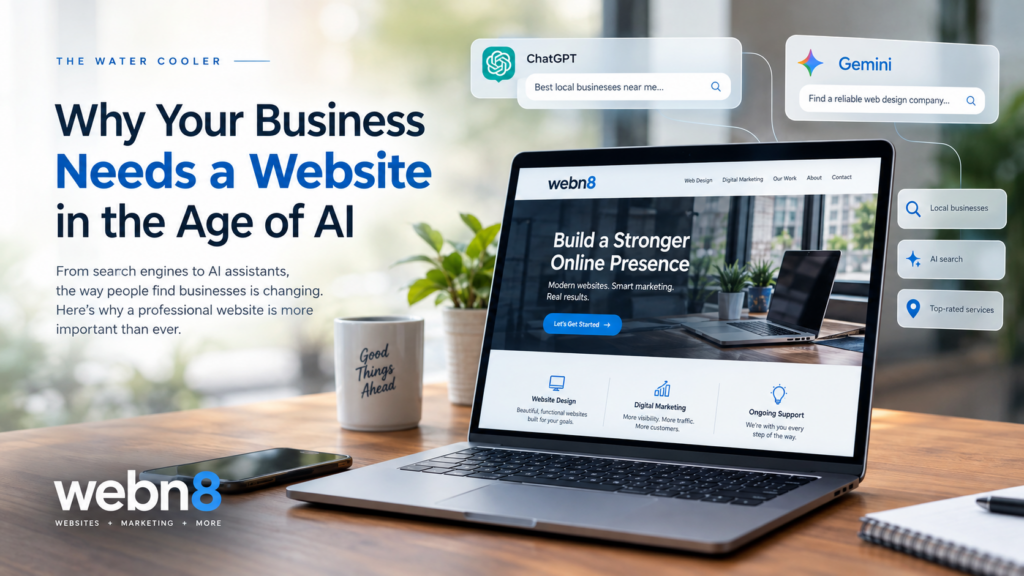

Your business may have set hours, but your customers do not always shop, research, or make purchasing decisions during those hours. That is one of the biggest advantages of having a strong online presence. Your website can continue working long after your office closes, helping potential customers learn about your business, explore your services, build trust, and take the next step.
However, simply having a website does not automatically make it a salesperson. A website needs to be strategically designed and maintained to guide visitors toward becoming leads or customers. When web design, SEO, content, and lead generation work together, your website can become one of the hardest-working parts of your marketing strategy.
Your Website Is Often the First Impression
When someone hears about your business, one of the first things they may do is search for you online. Even if they were referred by a friend, they may visit your website before making contact.
That means your website needs to immediately communicate who you are, what you do, and why someone should choose your business.
A confusing layout, outdated information, slow-loading pages, or unclear messaging can cause potential customers to leave before they ever contact you. On the other hand, a professional website can create confidence and make it easier for visitors to take the next step.
Your website should make a strong first impression while giving visitors the information they need to keep moving forward.
Make It Easy for Customers to Understand Your Business
A salesperson would not expect a customer to figure everything out on their own. They would explain the company’s services, answer questions, discuss benefits, and help the customer determine what solution is right for them.
Your website should do the same thing.
Your homepage should quickly communicate what your business offers and who you serve. Service pages should provide enough information to help visitors understand what you offer and why it matters. About pages can establish credibility, while testimonials and reviews can provide social proof.
The goal is not to overwhelm visitors with information. Instead, your website should organize information in a way that naturally guides people toward a decision.
Give Visitors a Clear Next Step
One of the biggest mistakes businesses make is assuming customers will know what to do next.
A visitor might be interested in your services but still leave the website if there is no obvious way to contact you, request an estimate, schedule an appointment, purchase a product, or learn more.
Strong calls to action can help eliminate that uncertainty.
Depending on your business, that could mean buttons such as “Request a Quote,” “Schedule an Appointment,” “Contact Us,” “Get Started,” or “View Our Services.”
Calls to action should be easy to find without becoming overwhelming. The objective is to make taking the next step simple.
Your Website Needs to Work on Every Device
People are searching from phones, tablets, laptops, and desktop computers. If your website does not function properly across different screen sizes, you could be losing potential customers before they ever have the opportunity to learn about your business.
Mobile-friendly design is no longer optional. Visitors should be able to read your content, navigate your pages, click buttons, complete forms, and find contact information without constantly zooming or scrolling in the wrong direction.
A responsive website creates a better user experience while also supporting your search visibility.
SEO Helps Customers Find Your Salesperson
Even the best website cannot generate many leads if nobody can find it.
This is where search engine optimization comes in.
SEO helps your website appear when potential customers search for products, services, and information related to your business. This includes optimizing website content, service pages, page titles, descriptions, headings, images, location information, and other technical elements.
For local businesses, local SEO can be especially important. Someone searching for a service in their area is often already closer to making a purchasing decision.
Your website should not just tell people what you do. It should help the right people discover you when they are looking for what you offer.
Create Content That Answers Customer Questions
Think about the questions your sales team hears every week.
Those questions can become valuable website content.
Blog posts, FAQs, service guides, educational articles, and other resources can help potential customers understand your industry and make informed decisions. At the same time, useful content can create additional opportunities for your website to appear in search results.
For example, a contractor could create content about preparing a property for construction. A real estate company could explain common terms buyers encounter during the home-buying process. A healthcare business could answer frequently asked questions about its services.
Helpful content allows your business to provide value before a customer ever contacts you.
Build Trust Before the First Conversation
People want to know that they are choosing a business they can trust.
Your website gives you an opportunity to establish that trust before a phone call, consultation, or appointment.
Professional photography, testimonials, reviews, project examples, certifications, awards, team information, FAQs, and detailed service information can all help visitors feel more comfortable.
The more confident someone feels about your business, the easier it becomes for them to take the next step.
Connect Your Website With Your Marketing
Your website should not operate in isolation.
Social media, email marketing, search engine optimization, paid advertising, and other marketing efforts can all drive people back to your website. Once they arrive, the website needs to continue the conversation.
For example, someone might discover your business through a social media post. Another person might find you through a Google search. Someone else could click on an email campaign.
Each visitor may arrive through a different channel, but your website should provide a consistent experience that makes it easy to learn more and convert.
Track What Is Working
One of the biggest benefits of digital marketing is that you can learn from the data.
Website analytics can help businesses understand where visitors are coming from, which pages they visit, how long they stay, and where they may be leaving.
This information can reveal opportunities for improvement.
If a service page receives a lot of traffic but very few inquiries, for example, it may need clearer messaging or a stronger call to action. If visitors leave a page quickly, the content or user experience may need to be reconsidered.
Your website should evolve based on what your customers are actually doing, not simply what you assume they are doing.
Keep Your Website Current
An outdated website can make an otherwise successful business look inactive.
Business information changes. Services are added. Contact details change. Team members join the company. New projects are completed. Promotions come and go.
Keeping your website updated ensures that customers are always receiving accurate information.
Fresh content can also give search engines more opportunities to understand your business and can provide visitors with a reason to return.
Turn Your Website Into a Business Asset
Your website should be more than an online brochure. It should be an active part of your sales and marketing strategy.
When your website combines professional design, strong content, SEO, clear calls to action, mobile responsiveness, trust-building elements, and ongoing optimization, it can continue working for your business around the clock.
That is the real value of a strategic website. It does not replace your team. Instead, it supports your team by helping potential customers find you, understand you, trust you, and take the next step.
At Webn8, we believe your website should work as hard as you do. From web design and SEO to digital marketing and lead generation, the right strategy can turn your online presence into a powerful tool for business growth.
Your business may close for the day, but your website doesn’t have to.